
The challenge
A new construction project in Farnham required a rainwater harvesting unit to be installed. The site was active with excavation work, and the system needed to be positioned correctly within the ground before surrounding areas were finished.
What we did
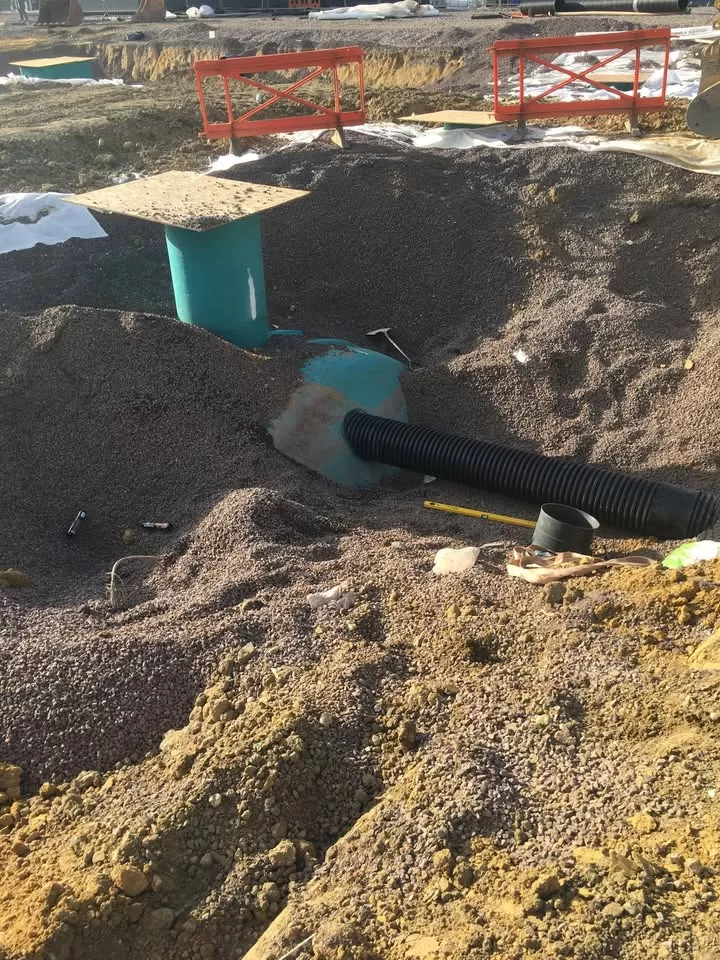
The installation began with placing the underground tank into a prepared bed of gravel. The tank was levelled and secured in position to ensure it would not shift under the weight of the surrounding backfill.
What we did
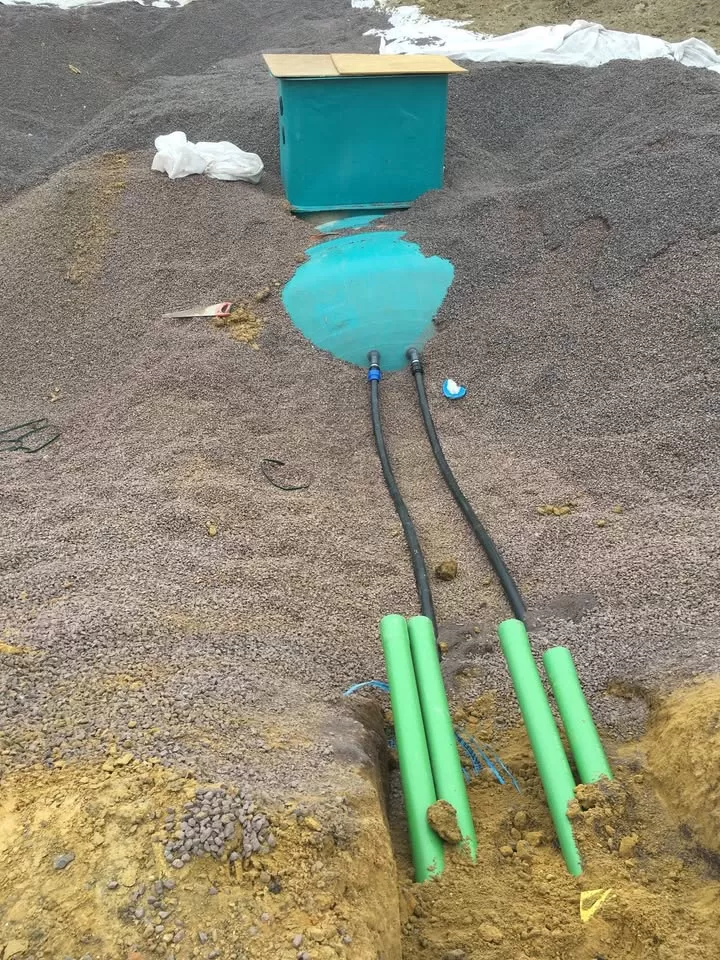
Pipework connections were made between the underground tank and the surface. Black flexible pipes were run from the tank to the pump room area, where green rigid pipes continued the route into the building. The pipework was laid in trenches and connected securely.
What we did
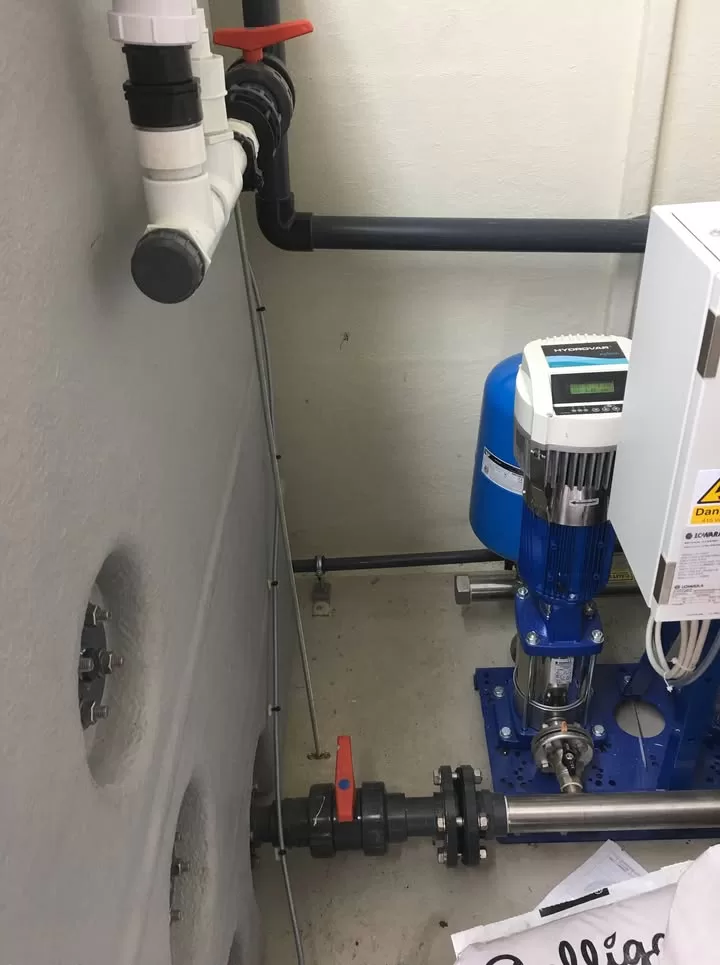
The pump room was fitted with a booster pump unit mounted on a blue base plate. A control panel was installed adjacent to the pump, and all pipework connections were completed within the room. The system was prepared for commissioning once the building services were in place.
Why it matters
A rainwater harvesting unit collects and stores rainwater from roofs for reuse in non-potable applications such as toilet flushing or garden irrigation. The underground tank must be installed on a stable base to prevent movement or damage over time.
Why it matters
The pipework connecting the tank to the pump room requires careful routing and secure joints to avoid leaks or blockages. The booster pump provides the pressure needed to distribute the harvested water through the building's plumbing system.
Why it matters
The control panel monitors water levels and manages pump operation automatically. Regular servicing of the pump and controls ensures reliable performance and extends the life of the equipment. Alton Pumps provides installation, repair and maintenance for rainwater harvesting systems across the South East.
This case study is written from the completed job record. Photographs are from the job. Customer names and addresses are not published.